Section 3: Architectural Sins Fair
The history of the development of the Strip, why famous casinos are located outside of Vegas, and the phenomenal $2.3 billion MSG Sphere.
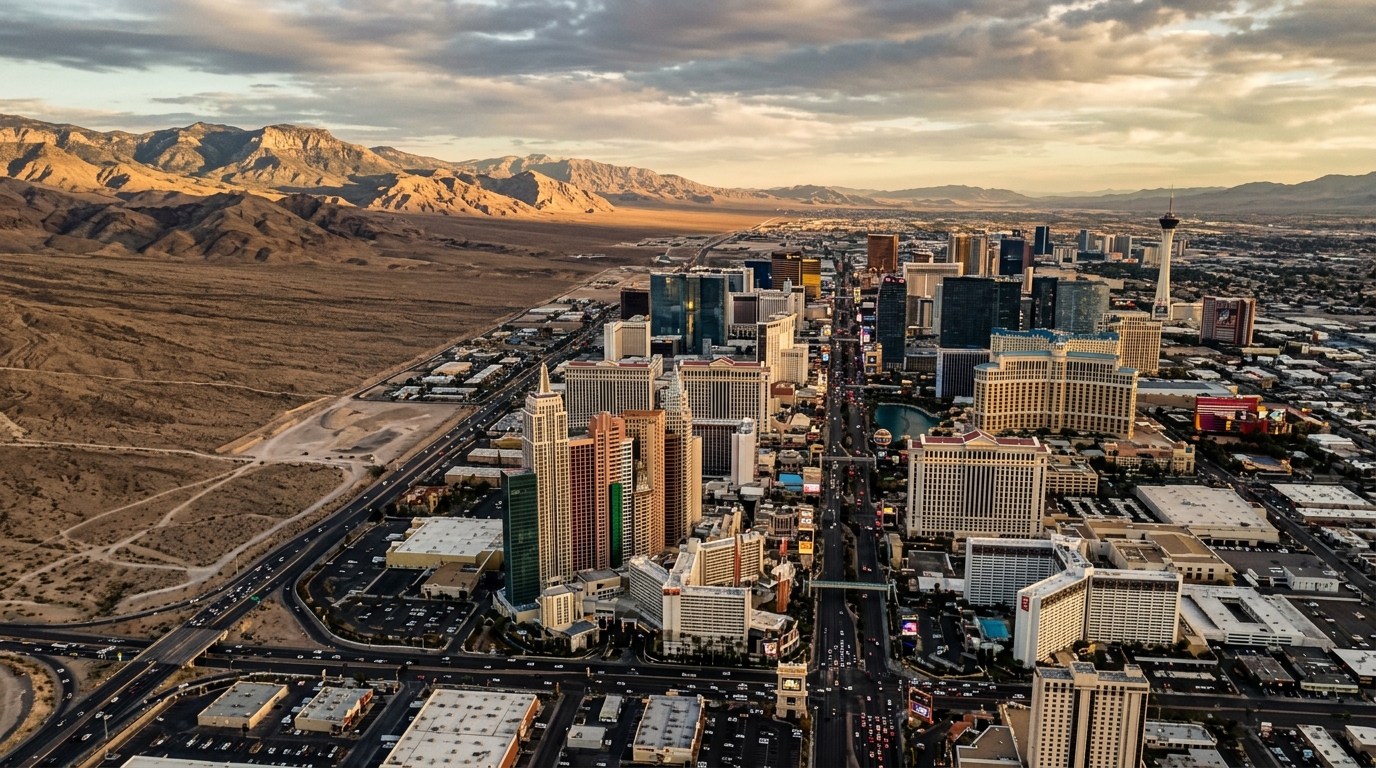
1. The Strip vs. The City: Mafia Tax Shelter
The famous Las Vegas Strip, which is 7 kilometers long, actually lies geographically outside the administrative boundaries of the city of Las Vegas. In the 1930s, casinos were only allowed to be built within the tightly limited confines of Fremont Street in the city's downtown area. To avoid taxes and strict control of the city administration, cunning syndicates began to buy up deserted plots south of the city limits. In response to the city's attempts to annex these lucrative lands, mob lobbyists pressured the Clark County commissioners into a legal maneuver: organize the areas into the unincorporated communities of Paradise and Winchester. Under Nevada law, the city cannot annex unincorporated communities. This paradox persists to this day: all the legendary casinos (Bellagio, Caesars Palace, MGM Grand) pay taxes to the budget of Clark County, and not the city of Las Vegas itself.
Key Facts:
- Most of the iconic Las Vegas casinos are legally located in the Paradise community.
- Downtown's Fremont Street is the only historic casino area within the city's official boundaries.
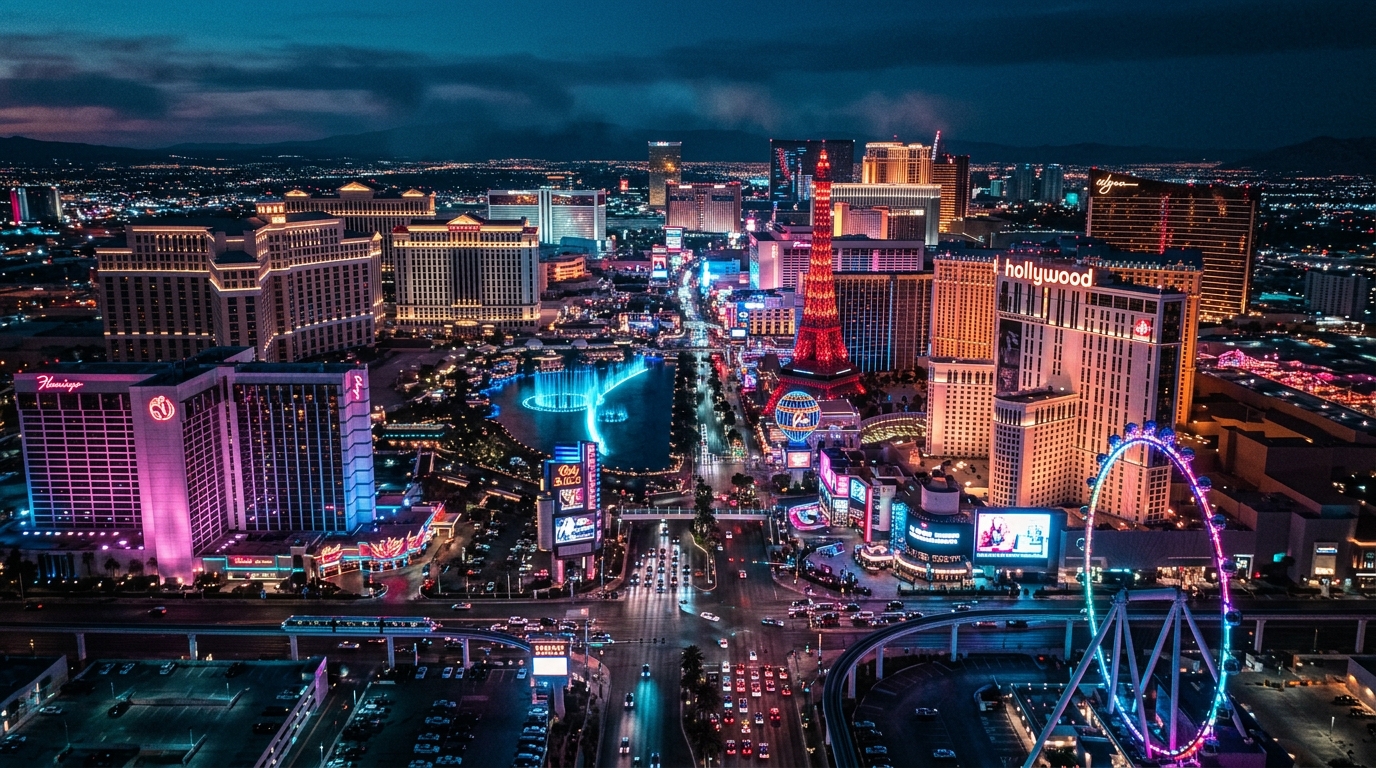
2. Copies of masterpieces and architectural pseudo-classicism
In the 1990s, Las Vegas was swept by megalomania and the fashion for creating themed hotel decorations imitating the world's greatest attractions. The following grew on the Strip: the Luxor Hotel in the form of a 36-story black glass pyramid of Cheops with a giant sphinx at the entrance; Paris Las Vegas with a replica of the Eiffel Tower and the Arc de Triomphe; New York-New York with the Statue of Liberty, the Brooklyn Bridge and roller coasters around the mini-skyscrapers of Manhattan; The Venetian with artificial canals on the second floor through which gondoliers ride tourists under a fake sky. Architects on the Strip tried to express sheer opulence by scaling classical architectural elements onto gigantic high-rise buildings (like the 36-story cornices and columns of the Bellagio or the cartoon Camelot Castle-like Excalibur Hotel). Renowned architectural theorists Robert Venturi and Martino Stearly have devoted entire monographs to Vegas, describing it as a unique 'fair' phenomenon, where the building functions as a giantadvertising sign.
Key Facts:
- Strip hotels were deliberately built as contrasting settings to attract maximum traffic.
- Las Vegas is recognized as the cradle of postmodern architectural kitsch.
3. Capital of controlled explosions
Unlike conservative Europe, Las Vegas is ruthlessly shedding its history for the sake of commercial gain. When the old post-war hotels were no longer profitable and fit for the mega-resort era, the city turned their demolition into a grand tourism show. Vegas has been unofficially dubbed the 'implosion capital of the world'. All key demolitions were performed by a single specialty company, Controlled Demolition, Inc. The explosions took place at night, were accompanied by large-scale fireworks, laser shows and attracted hundreds of thousands of spectators. The first victim in 1993 was the legendary Dunes Hotel - its demolition was framed as a fake shelling of a pirate ship from the cannons of the neighboring Treasure Island hotel on live television. The demolition of the Landmark Hotel in 1995 was integrated into the plot of Tim Burton's cult science-fiction film Mars Attacks! (Tim Burton insisted that the lights on the upper floors be on during the explosion, with extras scattering in panic in the foreground). From 1993 to 2007 on the Strip11 historic hotels were bombed, including the Sands (1996), Desert Inn (2001) and Stardust (2007). The latest high-profile implosion was the demolition of the legendary Tropicana in 2024 after 67 years of work.
Key Facts:
- The demolition of historic hotels in Vegas is always a lucrative fireworks show for tourists.
- On the site of the Dunes, the luxurious Bellagio has grown, and on the site of the Desert Inn, the Wynn mega-complex.
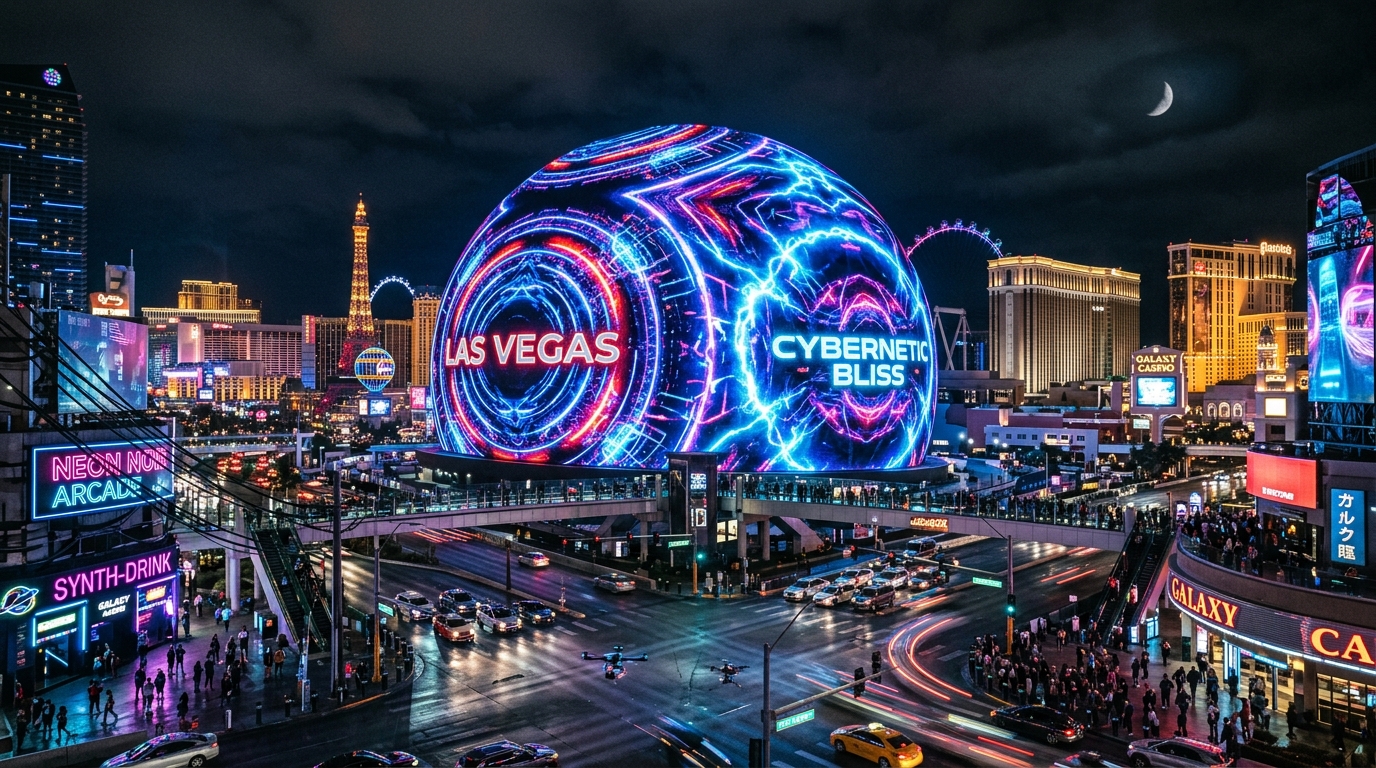
4. MSG Sphere: $2.3 Billion Screen of the Future
In 2023, Madison Square Garden opened the futuristic MSG Sphere concert arena, designed by the famous Populous bureau. Construction cost an astronomical $2.3 billion, making it the most expensive entertainment facility in the city's history. The sphere is 111 meters high and 157 meters wide and can accommodate up to 20,000 spectators. Its uniqueness lies in the fact that the entire external surface (with an area of 54,000 sq. m) is a solid LED screen made of 57.6 million elements. The sphere can transform into a realistic Moon, eye, Halloween pumpkin or Christmas snow globe. The world's largest ultra-high-resolution ring screen is installed inside, and the seats are equipped with haptic vibration actuators. Special 4D machines simulate gusts of wind, temperature changes and smells, creating the effect of absolute immersion during the show.
Key Facts:
- MSG Sphere is the largest spherical structure on the planet.
- The LED dome of the Sphere is visible even from space and has become a new symbol of digital Vegas.