Section 4: Sports on the Strip and the Climate Challenge
How Las Vegas became the sports capital of the world (NHL, NFL, Formula 1) and how the city survives record heat and drought.
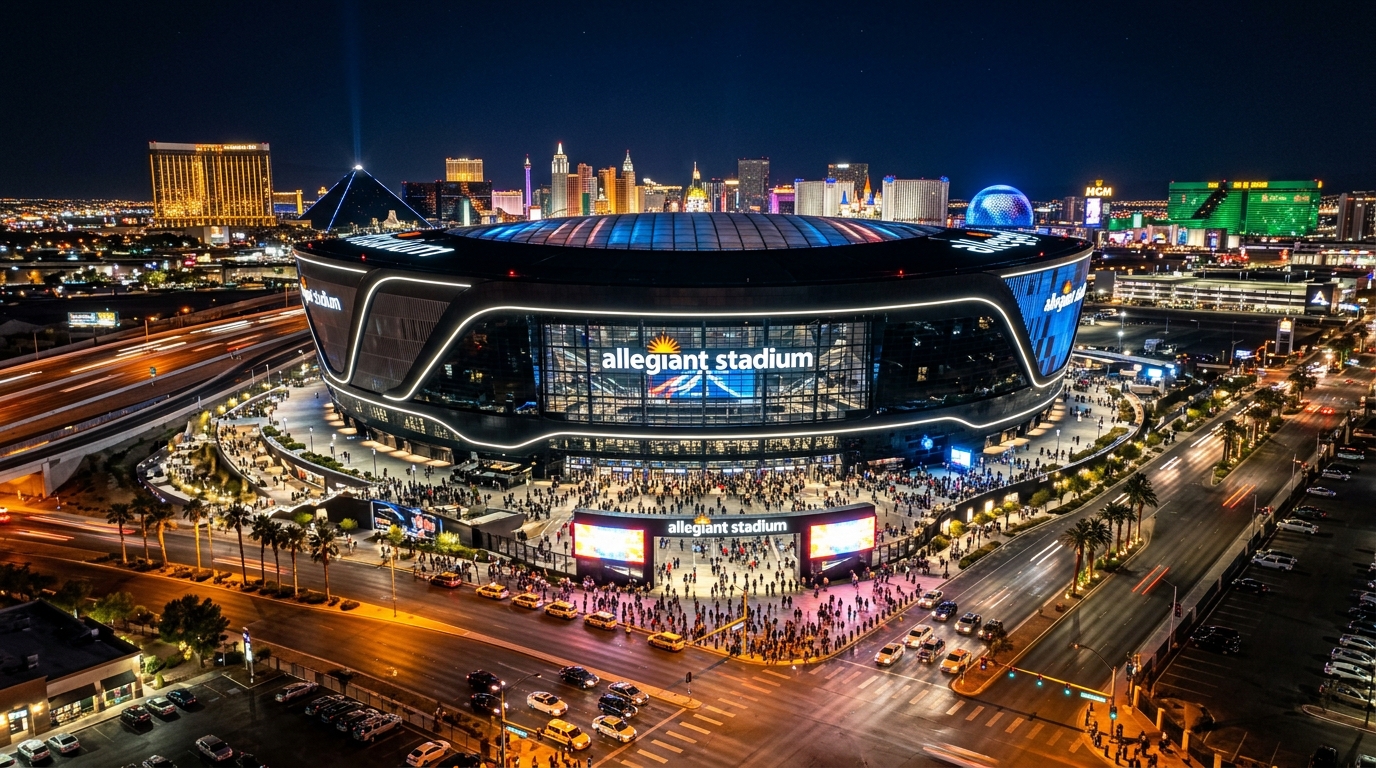
1. Sports Revolution: From Boxing to the Super Bowl
Professional sports have historically avoided Las Vegas due to strict anti-doping laws and legal betting associated with crime. For a long time, the city was associated only with elite boxing matches at the MGM Grand Garden Arena (held since the 1950s) and deserted Mint 400 car racing. That all changed in 2017 with the opening of the T-Mobile Arena and the triumphant debut of the Vegas Golden Knights (NHL) hockey club, which won the Stanley Cup in 2023, causing a wave of sports euphoria. In 2018, the Las Vegas Aces (WNBA) women's basketball team moved to the city. A major triumph was the move of the legendary Oakland Raiders (NFL) football team in 2020 to the purpose-built $1.9 billion Allegiant Stadium. In 2024, this stadium hosted Super Bowl LVIII, the greatest sporting event in the United States. In 2023, the annual Formula 1 stage of the Las Vegas Grand Prix debuted on the streets of the city, the track of which runs right along the Strip. In 2024closed the Tropicana Hotel to make way for a state-of-the-art baseball stadium for the Oakland Athletics, whose relocation is scheduled for 2028.
Key Facts:
- The Vegas Golden Knights won the Stanley Cup in the franchise's sixth year.
- Vegas has transformed from a 'city of sin' into a recognized sports capital of the United States.
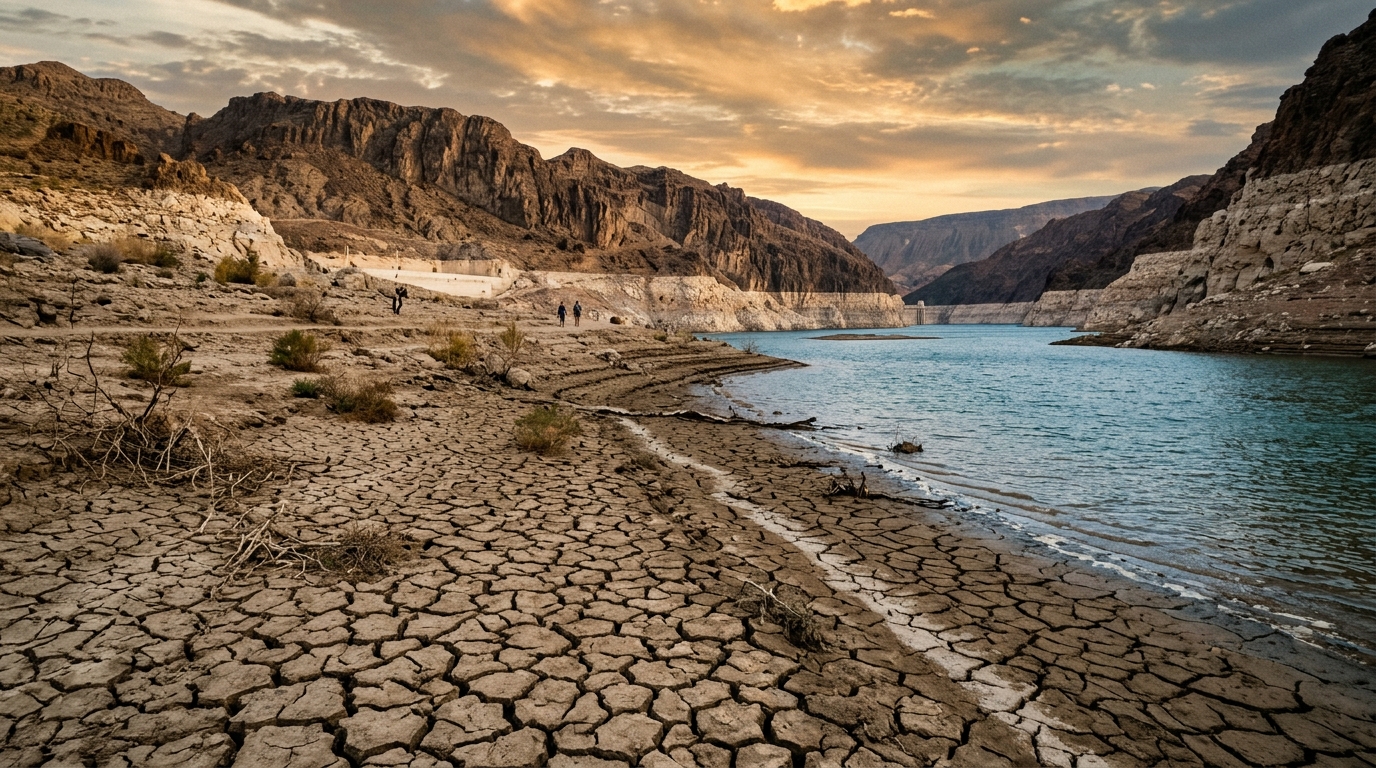
2. Extreme climate and the battle for water
Las Vegas is located in the centre of the rocky Mojave Desert and is the hottest metropolis in the United States. Summer temperatures regularly exceed 40°C, and on July 7, 2024, the city's all-time high temperature record was 120°F (48.9°C). The city is virtually devoid of natural landscaping along the roads and suffers from a 'heat island' effect due to gigantic areas of asphalt. The main challenge for the city's survival is the acute shortage of fresh water. The only source of water supply is the Mead Reservoir on the Colourado River. After the catastrophic drought of 2002, Clark County authorities introduced severe austerity measures: banning the planting of ornamental lawns near private homes, limiting watering and launching an advanced wastewater treatment system. As a result, daily per capita water consumption dropped from 314 gallons in 2003 to 205 gallons in 2015. Another climate threat is devastating flash floods. The mosta devastating flood occurred in July 1999, causing more than $20 million in damage, after which the county accelerated construction of a massive network of underground flood control channels.
Key Facts:
- 90% of the water in Vegas is treated and returned to Lake Mead.
- The 2024 temperature record (48.9°C) confirmed the acceleration of climate change in Nevada.
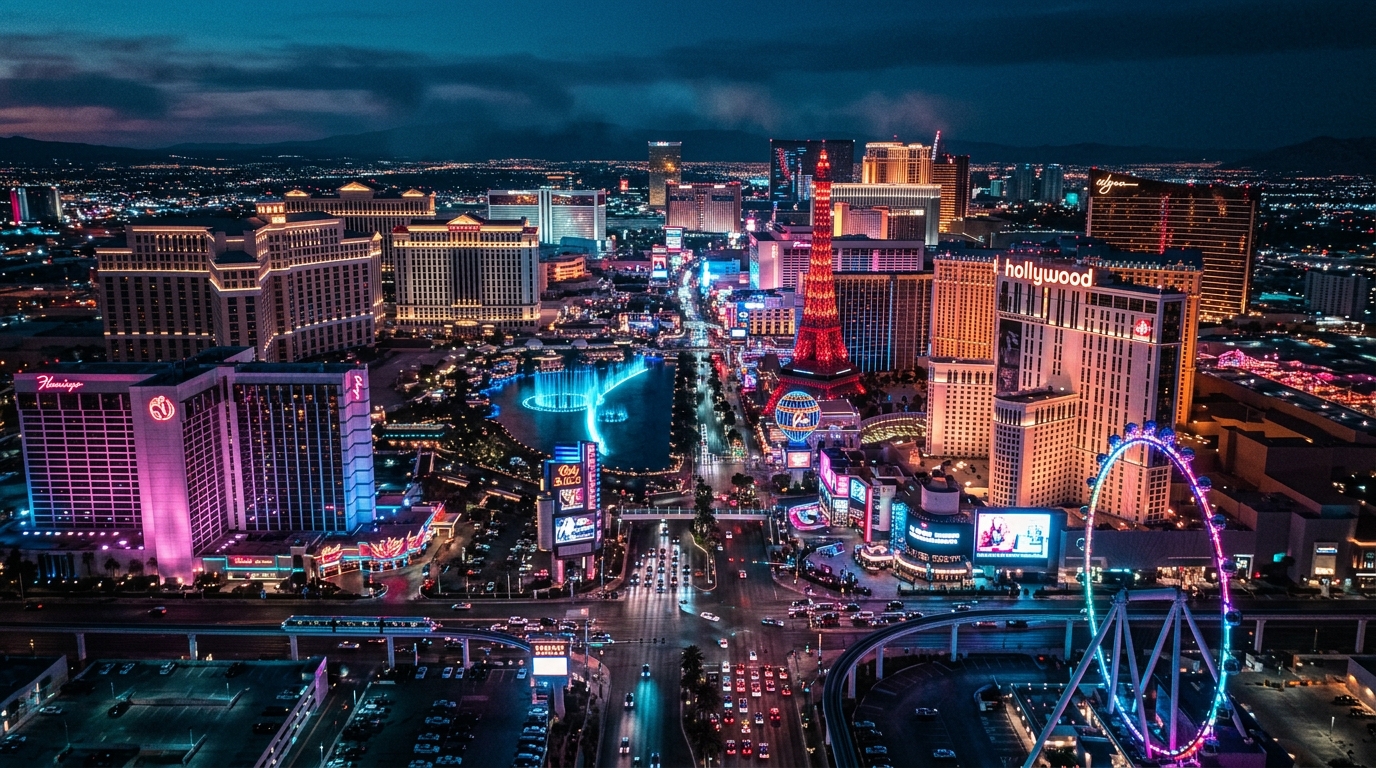
3. Recent History: Recession 2025 and Waymo 2026
In 2025, Las Vegas faced an unexpected economic challenge known as the 'Trump Slump'. Due to the imposition of tariffs, harsh immigration checks and visa restrictions of the new US administration, the flow of foreign tourists (especially from Canada and Mexico) has sharply decreased. Net income for casinos on the Strip fell a record 81.2% in 2025 compared to the previous year. For the first time in history, Downtown casinos (which lost just 20.2%) were more profitable than the Strip giants. Also in January 2025, a Tesla Cybertruck exploded at the entrance to the Trump International Hotel, carried out by a veteran with PTSD. Despite temporary difficulties, the city continues its technological development: in July 2026, large-scale testing of Waymo’s fully autonomous driverless taxis began on the roads of Vegas. Construction is also ongoing on Brightline West, the first high-speed rail in the United States, which will connect Las Vegas to Los Angeles by 2028 at speeds faster than300 km/h.
Key Facts:
- In 2025, Downtown casinos generated more net income than Strip casinos.
- The Brightline West high-speed train will allow travel from Los Angeles to Vegas in just two hours in 2028.